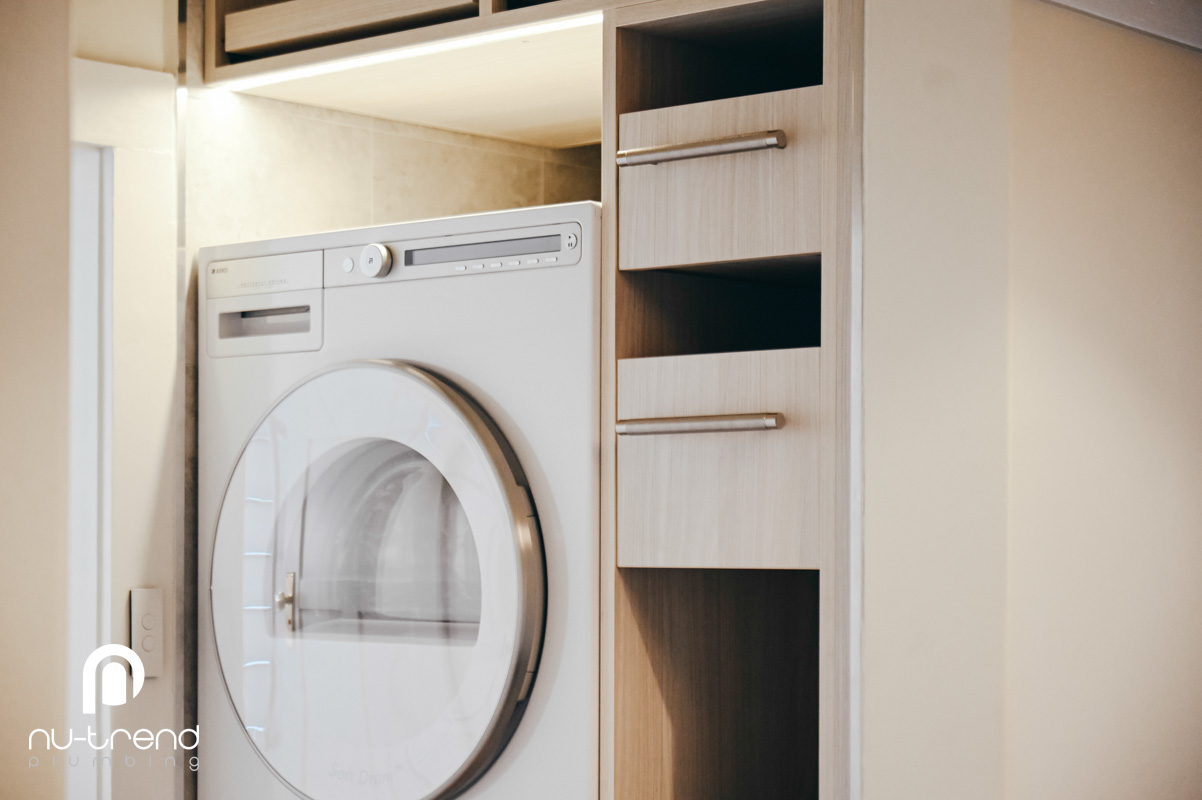
Converting a laundry into a bathroom in Sydney
Turning a laundry into a bathroom is the least disruptive way to add a second bathroom to a Sydney home, because the room is already a wet area with drainage, a water supply and a floor waste. It costs a fraction of what an extension costs and it takes weeks rather than months.
The three most common questions we get asked about is;
a) Whether your laundry has the ability to have a shower installed
b) Where the appliances would be located
c) If there is enough space to also add a toilet
What the conversion costs
Converting a laundry into a full bathroom with a shower, toilet and vanity in Sydney typically costs $25,000 to $35,000. Where the layout also changes, with walls moved or the room enlarged into adjoining space, the range extends to well over $35,000 depending on whether walls need to be changed.
| Scope | What you get | Indicative cost |
|---|---|---|
| ScopeToilet and vanity only, existing layout | What you getA powder room, no shower, no waterproofing to full wet area standard | Indicative cost$5,000 to $10,000 |
| ScopeFull conversion in the existing footprint | What you getShower, toilet, vanity, full waterproofing, new tiling and fit off | Indicative cost$25,000 to $35,000 |
| ScopeConversion with a layout change | What you getAs above plus walls moved or removed, drainage relocated, larger room | Indicative cost$35,000 and above |
Costs are indicative and current at September 2026. The gap between the first row and the second is the shower, because adding one turns the room into a full wet area that has to be waterproofed and certified across the whole floor.
The single biggest variable is the floor. On a suspended timber floor with subfloor access, relocating drainage is straightforward. On a concrete slab it means saw cutting a channel, laying the pipe at the right grade and making the slab good, which adds both time and cost.
Is your laundry a good candidate?
The rooms that convert well share four characteristics.
| Good sign | Why it matters |
|---|---|
| Good signThe room is close to the existing sewer connection | Why it mattersShort drainage runs are cheaper and there is more fall available to work with |
| Good signThere is a window or an external wall | Why it mattersNatural light and ventilation, and somewhere to duct an exhaust fan to outside |
| Good signThe room is at least about 1.6m by 2m | Why it mattersEnough for a shower, a toilet and a small vanity without the layout becoming awkward |
| Good signThere is somewhere else the laundry can go | Why it mattersA cupboard, a garage, a corner of a kitchen, or the room stays part laundry |
The two things that stop a conversion are almost never aesthetic. They are insufficient fall to run a shower waste, and having nowhere to put the washing machine.
Where does the laundry go afterwards?
This is the part people underestimate, and it is worth settling before the demolition rather than afterwards. There are four normal answers.
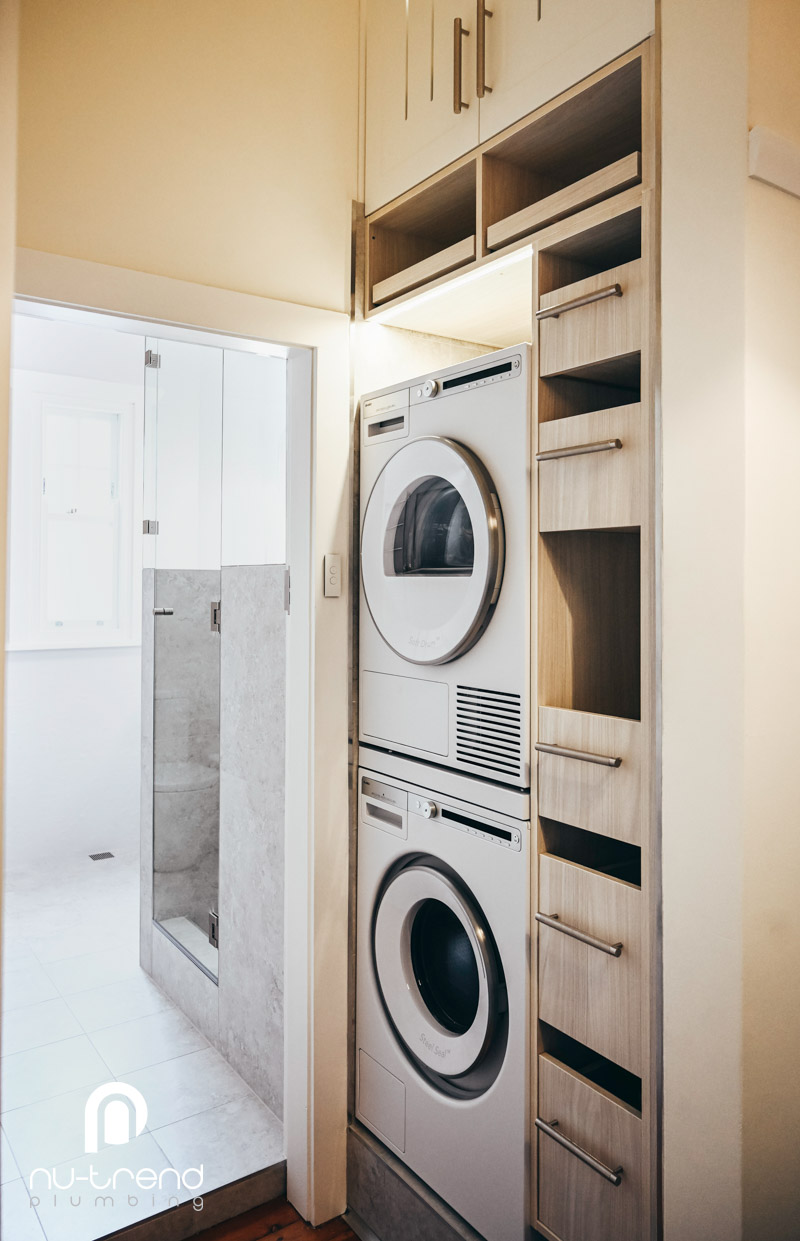
- A European style laundry cupboard elsewhere in the house, with a stacked washer and dryer behind bifold doors. This needs plumbing, a power point and ventilation, and it takes up about the width of a wardrobe.
- The garage, which is usually the cheapest option because there is often already a tap and a drain nearby.
- A corner of the kitchen or a walk in pantry, which works better than it sounds where the plumbing is close.
- The room stays part laundry. Rather than a full conversion, the room becomes a combined bathroom and laundry with the machines enclosed in joinery. This is the answer for a great many Sydney homes with no other space.
If the fourth option is where you land, our page on combined bathroom and laundry floor plans covers how to lay that out properly. If a toilet alone would be enough, adding a toilet to a laundry is the smaller and cheaper version of this project.
What is involved, stage by stage
A laundry conversion is a wet area build, and the sequence is the same as a bathroom renovation because that is what it is.
- Demolition. The tub, the existing floor covering, the wall linings where services need to be reached, and anything that is not staying.
- Inspection. The floor structure and the existing drainage are checked before anything is committed to, because this is where surprises live.
- Plumbing rough in. New drainage for the shower and the toilet, hot and cold water to the new fixture positions, and venting.
- Electrical rough in. Lighting, exhaust fan ducted to outside, and power points positioned for the finished layout.
- Floor preparation. The substrate is checked and replaced where it is not suitable for a wet area, then screeded to fall.
- Waterproofing. Applied to AS 3740:2021 with the drying time the product requires, then certified. This cannot be rushed and it is the stage that most affects how long the job takes.
- Tiling and grouting to the floor and walls.
- Fit off. Toilet, vanity, tapware, shower screen, mirror, accessories.
- Testing, commissioning and a clean.
How long it takes
A straightforward conversion in the existing footprint typically takes 4 weeks on site. Where walls move or drainage has to be relocated in a slab, allow 4-5 weeks. A meaningful part of that is drying time for the screed and the waterproofing membrane, which is fixed by the products rather than by how many people are on site.
What changes legally when a laundry becomes a bathroom
Adding a shower and a toilet means new fixtures, which takes the work outside the minor work exemption that covers a like for like renovation. Your plumber must lodge a Notice of Work before starting, issue a Certificate of Compliance on completion and give you a copy, and lodge a Sewer Service Diagram showing the new drainage layout. In Sydney Water‘s area of operations these go to Building Commission NSW.
The room also becomes a wet area for waterproofing purposes, which means it needs a waterproofing membrane, installed to AS 3740:2021 by a licensed waterproofer. Development consent from council is not usually required for work inside an existing room, but it becomes relevant where the work is structural, where it affects a Sydney Water asset, or where the property is strata and the owners corporation must approve work to common property.


Common questions about converting a laundry into a bathroom
How much does it cost to convert a laundry into a bathroom?
Converting a laundry into a full bathroom with a shower, toilet and vanity in Sydney typically costs $25,000 to $35,000. Where the layout also changes, with walls moved or the room enlarged into adjoining space, the range extends to well over $35,000 depending on whether walls need to be changed.
Can you convert a laundry into a bathroom without moving the laundry out?
Yes, and it is what a great many Sydney homes end up doing. The room becomes a combined bathroom and laundry with the machines enclosed in joinery. It needs more careful planning around ventilation and storage than a straight conversion does, and it avoids the problem of having nowhere to wash clothes.
Is it cheaper than building an extension?
Considerably, because the room, the roof, the walls, the drainage and the water supply already exist. An extension involves footings, structure, roofing and usually development approval, which is a different order of cost and timeline entirely. The other common source of space is converting a bedroom into a bathroom, and our bathroom renovations page covers the finished room.
Does a second bathroom add value?
A second bathroom is one of the features buyers and tenants look for most consistently in a home with one, particularly a family home. Most people who ask us to add a second toilet or bathroom are not doing it with a sale in mind. They are doing it because four people share one bathroom on a weekday morning, because a parent has moved in, or because guests currently have to walk past bedrooms to reach the only toilet in the house. The value shows up first in how the house is lived in, every day, long before anyone thinks about selling it. It also changes how the property is described from that point on, because the number of bathrooms is a core attribute recorded on every sale and rental listing and one of the standard filters buyers and renters use to narrow a search, so a one bathroom home becomes a two bathroom home in every listing, rental appraisal and valuation.
Can the toilet be moved on a concrete slab?
Yes. The slab is saw cut to create a channel for the new drainage, the pipe is laid at the required grade, and the slab is made good before screeding and waterproofing. It is normal work on a slab on ground home and it is priced accordingly.
Find out whether your laundry can become a bathroom
The answer comes down to drainage and to where the laundry goes afterwards, and both can be settled in a single visit. We will look at the room, tell you what is possible, suggest where the machines could live and give you a fixed written price.
Call Rick on 0401 165 779 or request a site visit.
Reviewed by Rob Te Maipi, Director and nominated supervisor, Nu-Trend (NSW licence 276711C).