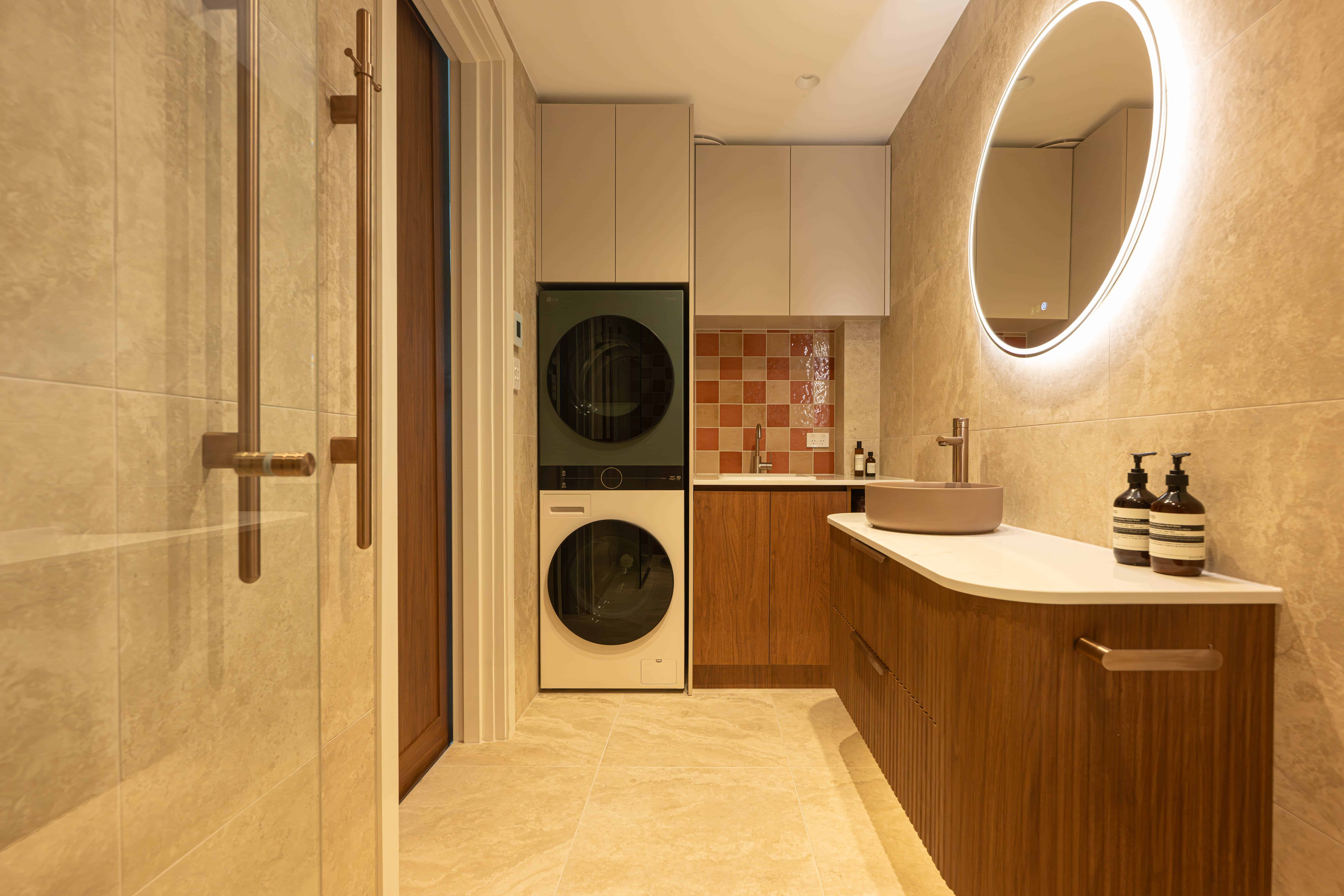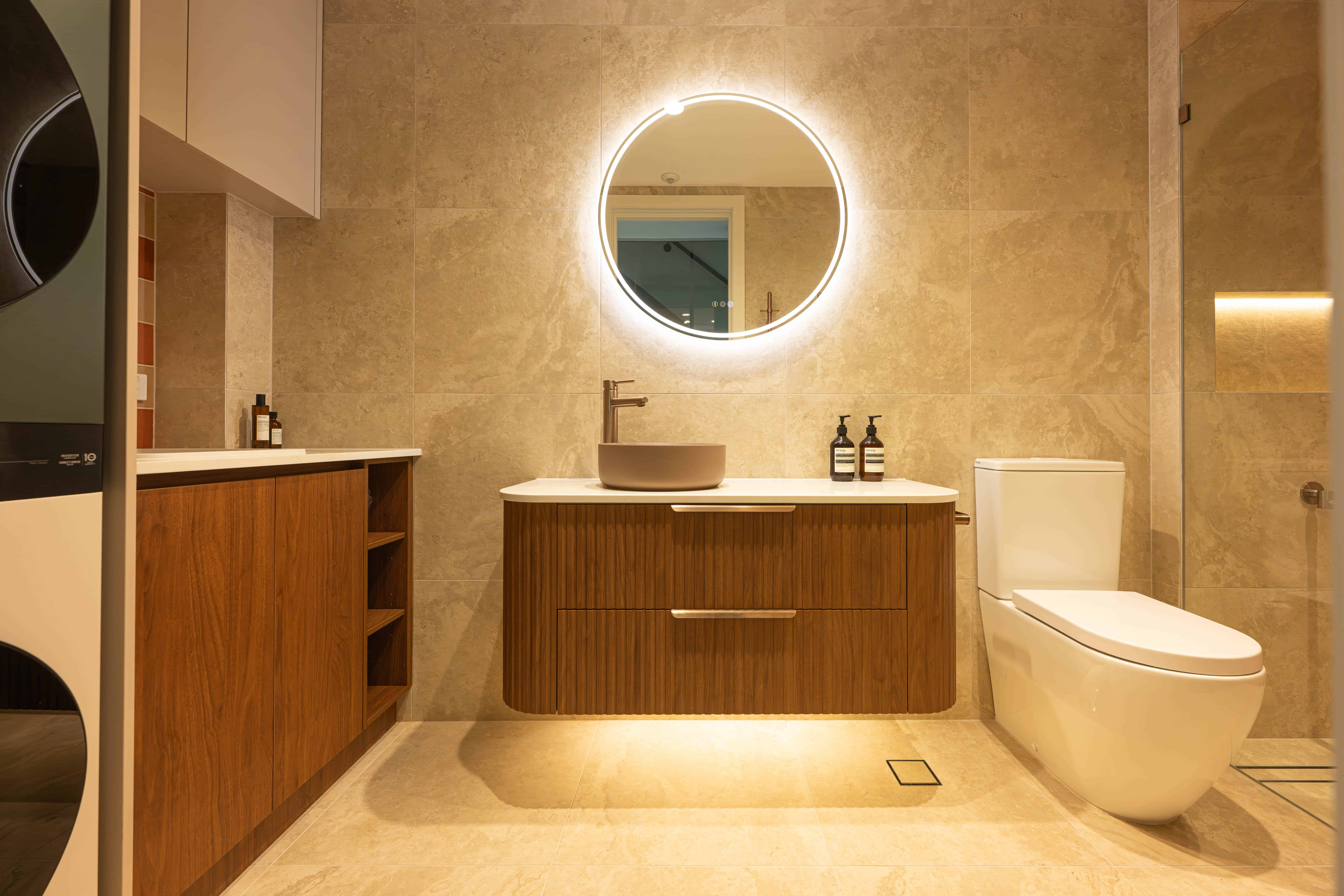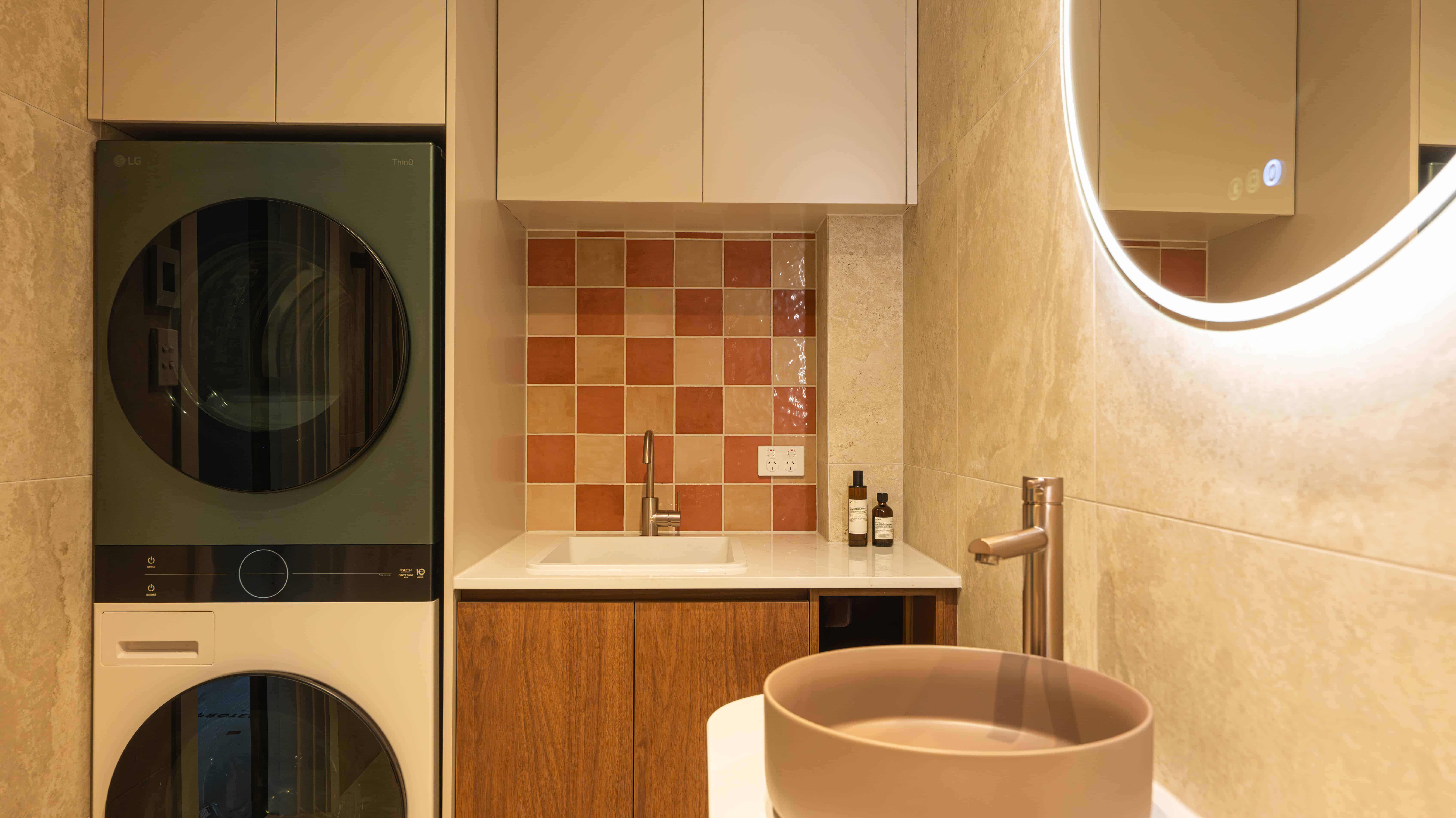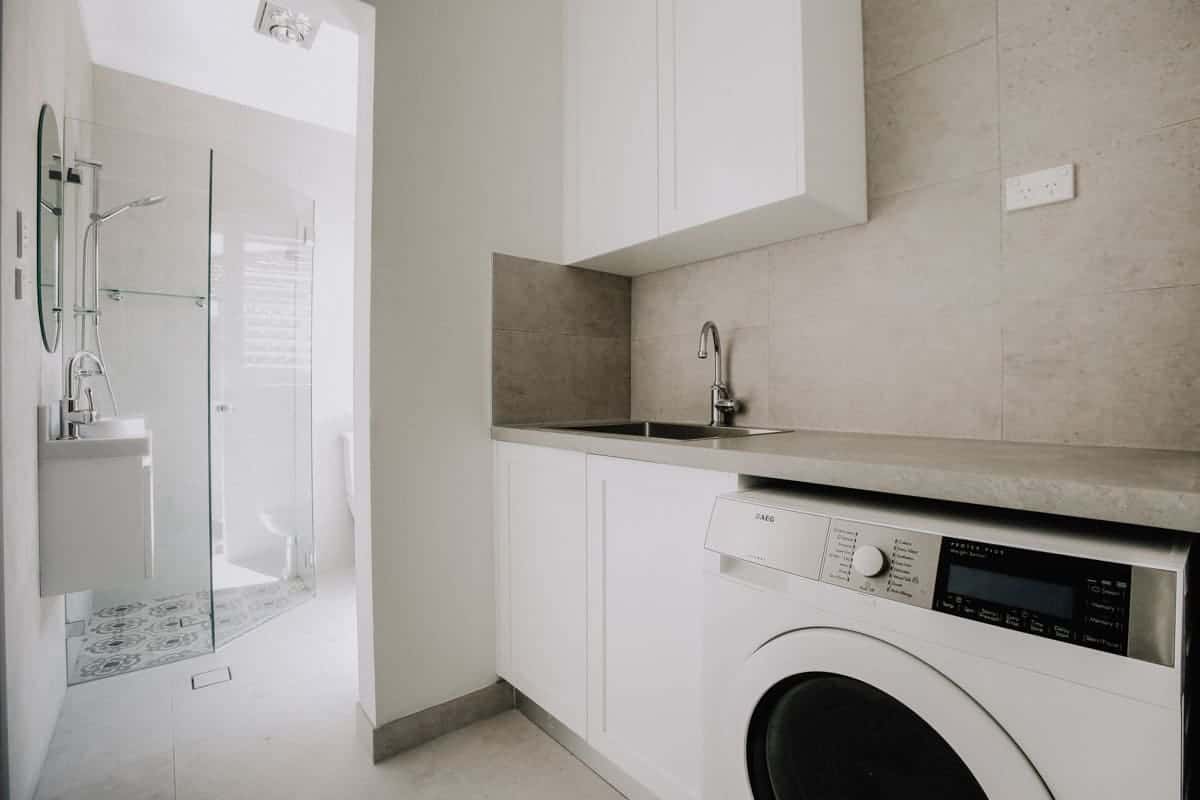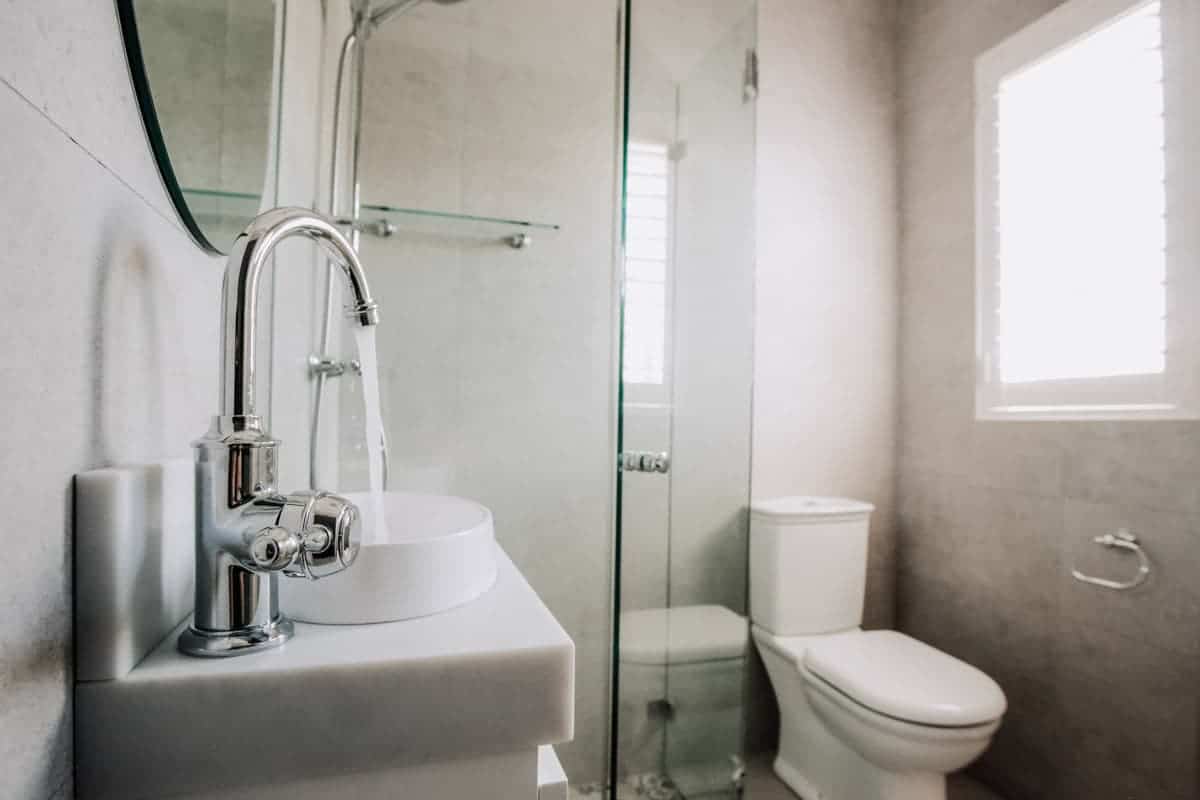
Combined bathroom and laundry floor plans, costs and ideas
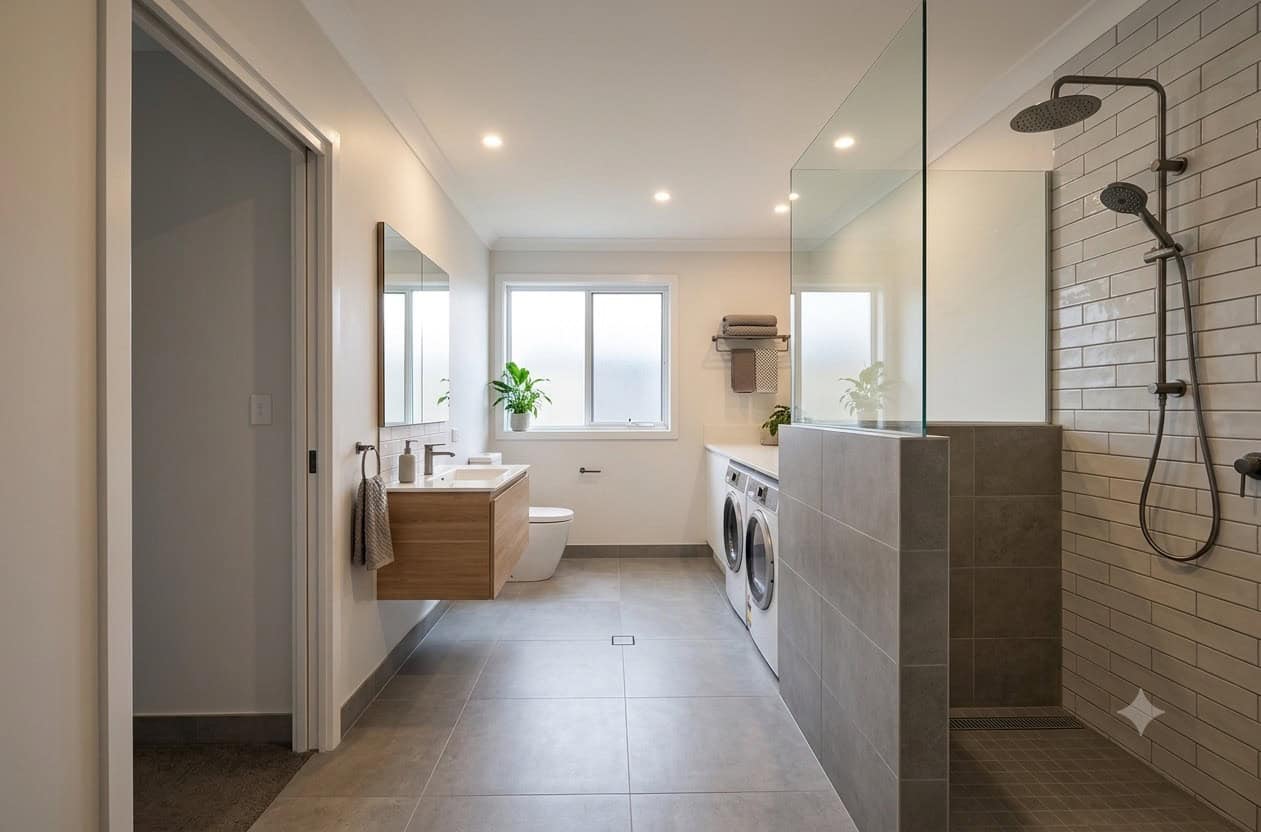
Combining a bathroom and a laundry into one room is one of the most effective ways to gain usable space in an Australian home, because both rooms are already wet areas, both already have drainage, and separately they each waste floor area on a door and a circulation path.
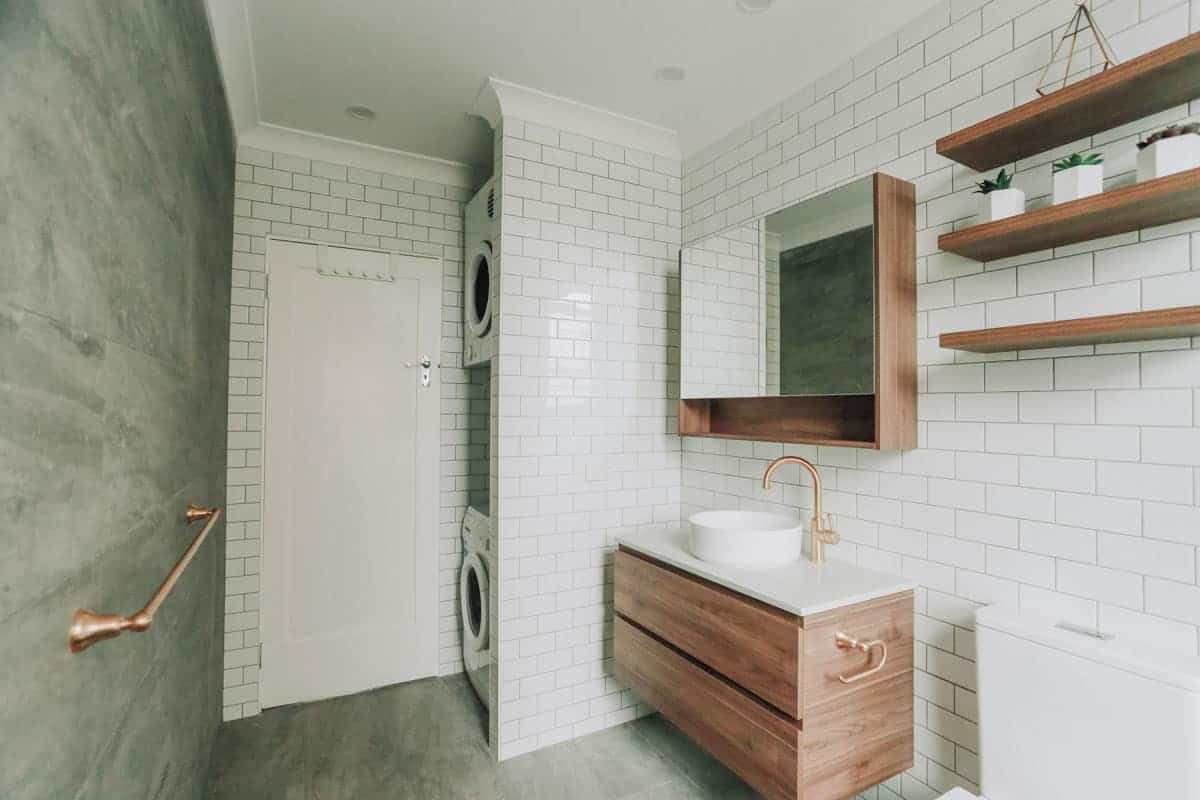
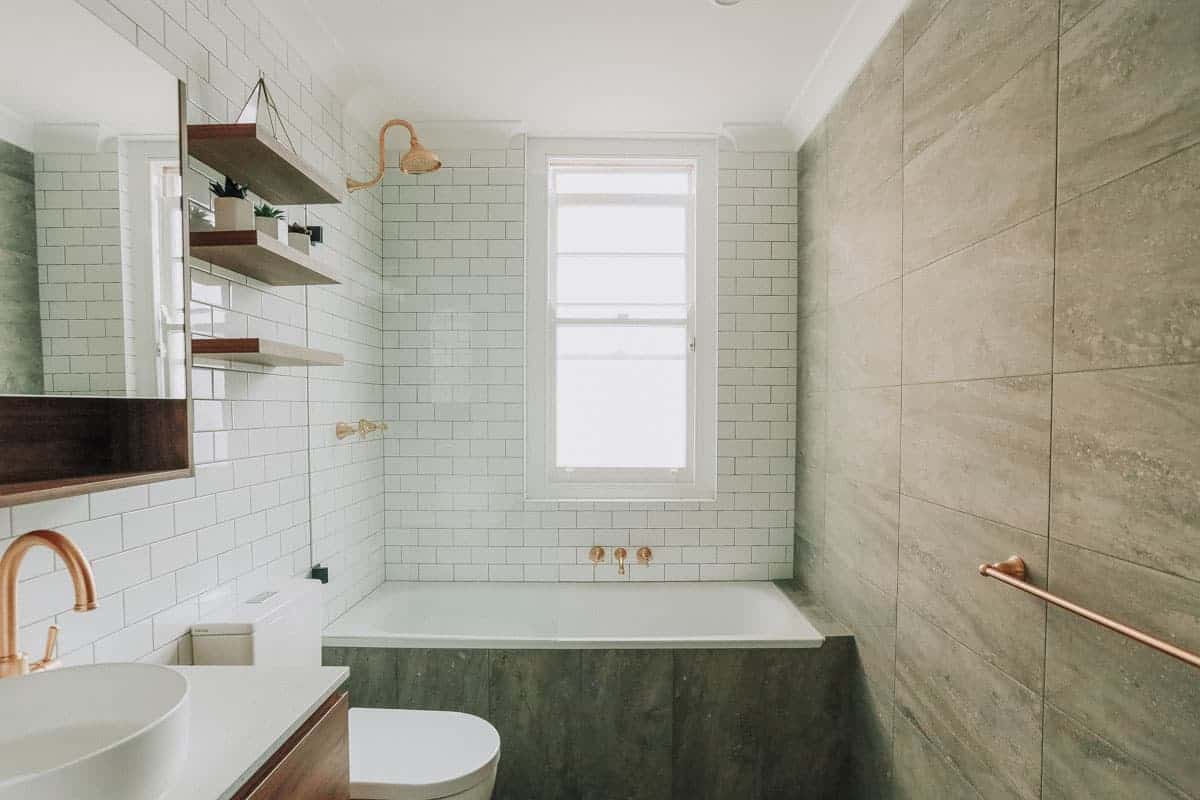
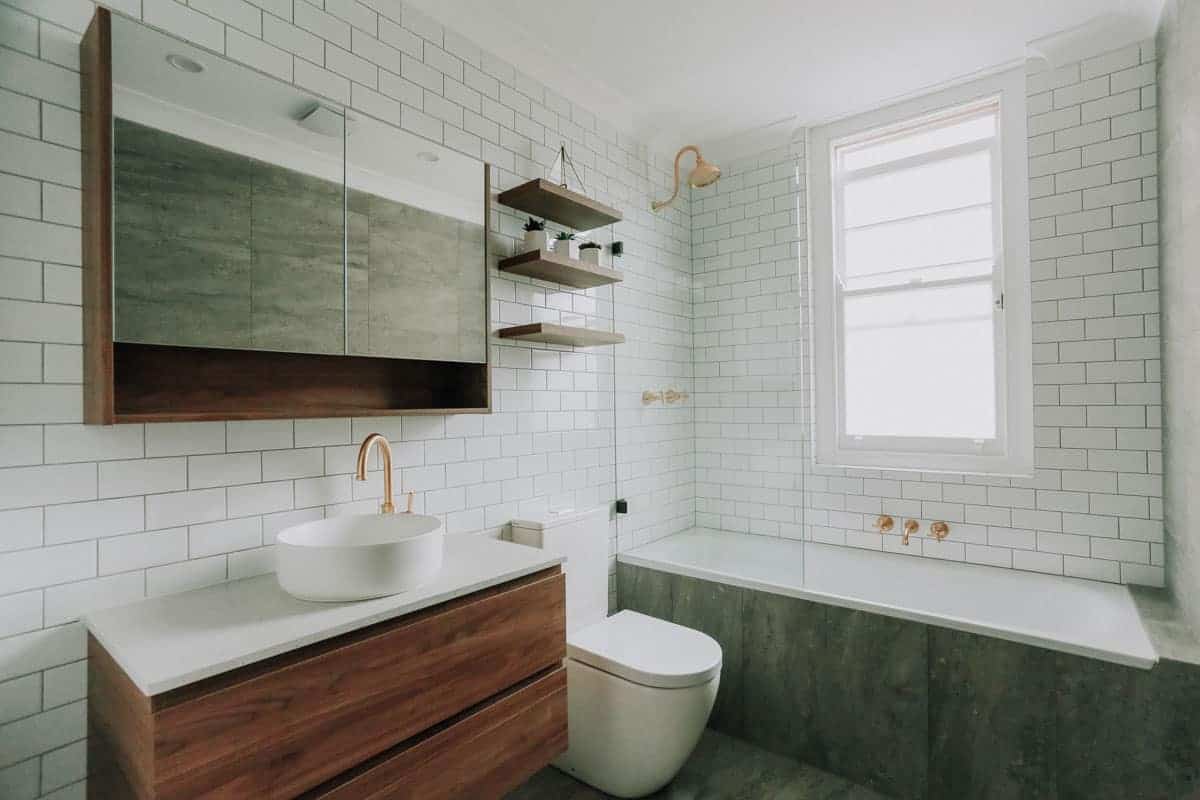
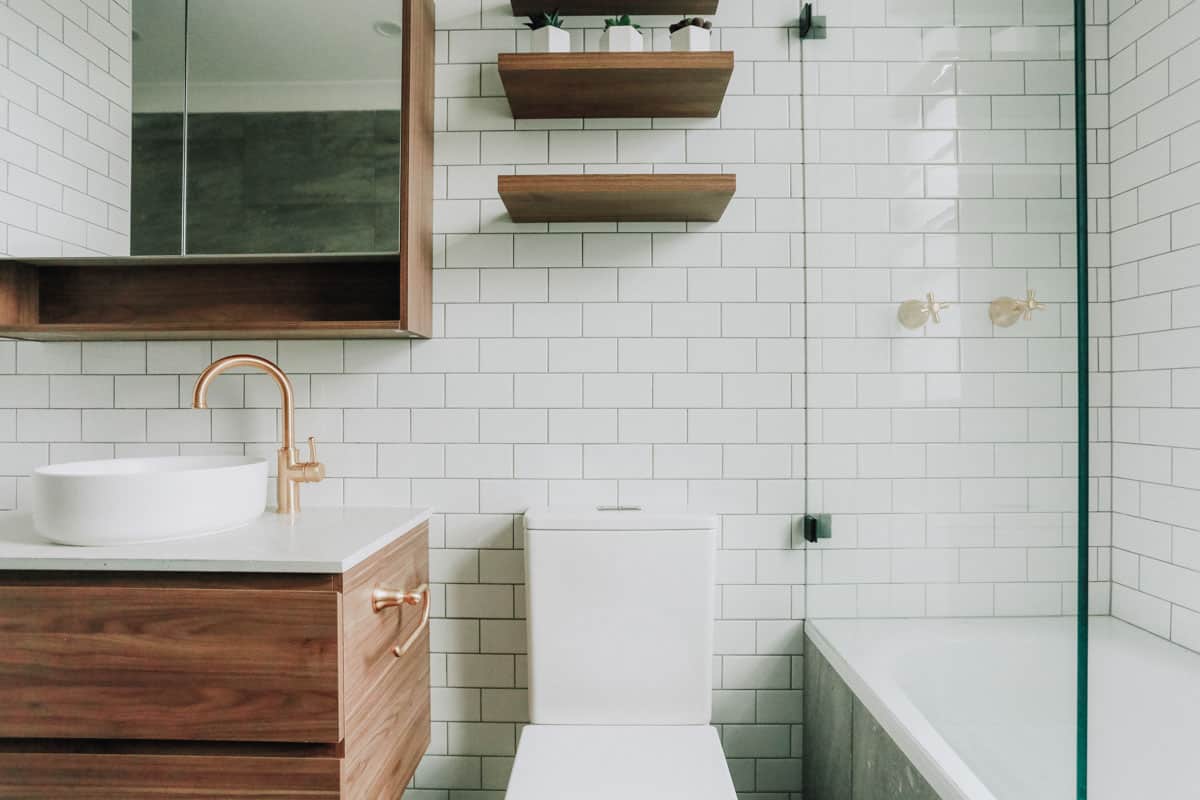
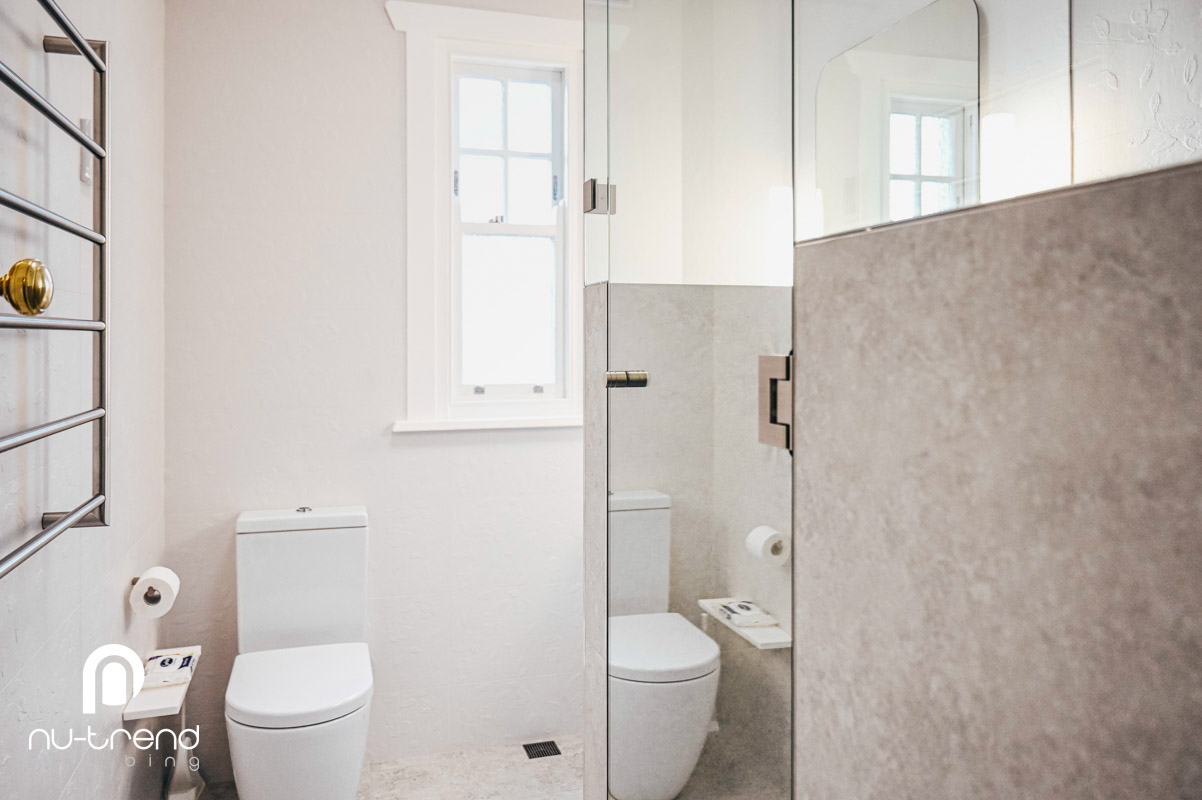
You can even use AI tools to mock up visual examples of what your new bathroom can look like, just like the sample at the top of this page that used Google’s Gemini.
Done well, the result is a larger, brighter room that does two jobs.
Done badly, it is a bathroom with a washing machine in it.
The difference is almost entirely in the floor plan, which is why this page starts with plans rather than with benefits.
Four floor plan examples
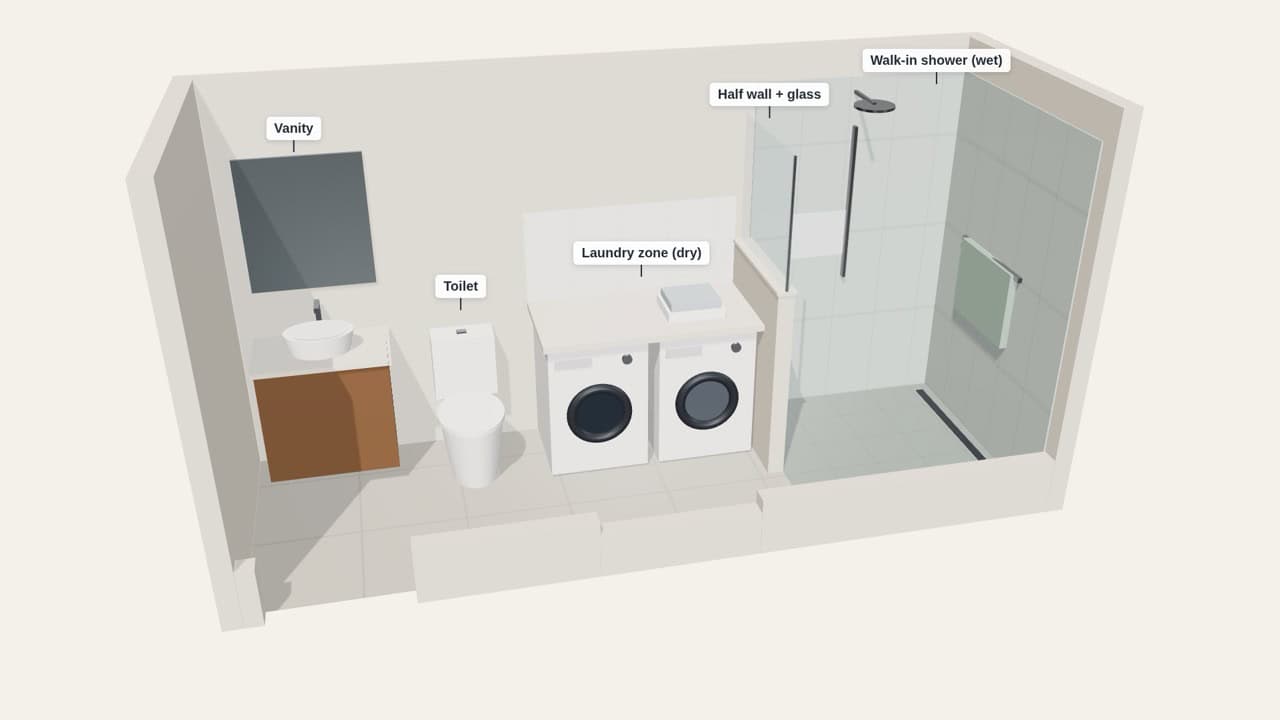
Four combined bathroom and laundry layouts, the room each one suits, and where the machines go.
Machines in a full height cupboard along one wall
- Suits
- Rectangular rooms 2.4m or widerPlan drawn at 2.4m x 3.6m
- Where the machines go
- Behind bifold or cavity doors, out of sight when closed
Machines under a continuous bench
- Suits
- Rooms with a long straight wallPlan drawn at 2.0m x 4.0m
- Where the machines go
- Front loaders under the bench, with the bench used for folding
Machines stacked in a corner recess
- Suits
- Narrow rooms and apartmentsPlan drawn at 1.8m x 3.0m
- Where the machines go
- Dryer stacked over the washer, screened by a half wall or door
Machines behind a half wall dividing wet and dry zones
- Suits
- Longer rooms where the shower sits at one endPlan drawn at 1.5m x 4.5m
- Where the machines go
- The dividing wall separates the shower zone from the laundry zone
Plans are indicative layouts to show what fits. Every combined room is designed from a site measure, and the final layout depends on where the drainage can run, which walls are structural, ventilation, and waterproofing to AS 3740 and the National Construction Code.
What a combined bathroom and laundry renovation costs
A combined bathroom and laundry renovation in Sydney typically costs between $50,000 and $70,000, depending on whether the two rooms already share a wall, whether that wall is structural, how much of the plumbing has to move, and the level of joinery in the room.
It is a given the joinery is doing more work than in a standard bathroom, cabinetry is usually a larger share of the total than people expect.
| Scenario | What is involved | Indicative cost |
|---|---|---|
| ScenarioTwo adjoining rooms, non structural wall removed | What is involvedRemove the wall, rework drainage into one layout, new joinery, full wet area build | Indicative cost$50,000 to $60,000 |
| ScenarioLaundry absorbed into an existing bathroom | What is involvedMachines relocated into the bathroom, new joinery, drainage extended | Indicative cost$40,000 to $50,000 |
| ScenarioStructural wall or major relocation | What is involvedEngineering, structural work, significant drainage relocation | Indicative cost$50,000 to $70,000 |
Costs are indicative and current at September 2026. The fixed price for your room depends on whether the wall is structural, how far the drainage has to move and the level of joinery, and is set after a site measure.
Why people combine the two rooms
The reasons people give us are consistent, and they are more practical than aesthetic.
You gain the space the wall and the second door were using
A dividing wall, a doorway and the floor area a door needs to swing through add up to more than most people estimate. Removing them frequently makes the difference between a bathroom that can take a walk in shower and one that cannot.
The laundry gets light and ventilation it never had
Sydney laundries are typically small, internal and poorly ventilated. Opening the space into the bathroom usually gives it access to a window, and it always gives it a much larger volume of air, which matters more than people realise once a dryer is running in there.
Storage improves dramatically
Most original laundries have a tub, a bench if you are lucky and nothing else. A combined room is joinery driven, which means cupboards, drawers, a proper bench and somewhere to put the things that currently live on the floor.
The waterproofing gets renewed across both rooms
Both rooms are wet areas and both were probably waterproofed to the standard of whenever they were last built. Doing them together means one continuous membrane installed to AS 3740 and certified, rather than two rooms of different ages sharing a wall. Where the laundry is disappearing altogether, we cover converting a laundry into a bathroom separately, and adding a toilet to a laundry is the smaller version of the same project.
The design reads as one room
Renovating the two rooms separately, even a year apart, almost always produces a mismatch in tile, tapware and joinery. Doing them together gives one palette and one set of finishes.
The ventilation mistake that causes mould
This is the part of a combined bathroom and laundry that goes wrong most often, and it is worth understanding before the design is finalised.
- A bathroom produces moisture when someone showers.
- A laundry produces moisture when a dryer runs.
Combine the rooms and, unless the dryer is condenser or heat pump and vented correctly, you can have both happening in the same air volume at the same time.
The answer is not a bigger window. It is a mechanical exhaust fan sized for the volume of the combined room rather than for a small bathroom, ducted to outside rather than into the roof cavity, and where the dryer is vented, ducted separately to outside as well. Getting this wrong shows up as mould on the ceiling and in the joinery within the first year.
We typically do not recommend a fan because we don’t have the expertise needed e.g.
– does the fan fit in the ceiling joist space
– does the existing electricals available comply with the new fan or does the wiring or switchboard need upgrading
– different fans serve different purposes for different rooms
What we do is inform any client that once demolition is complete & during the electrical rough in, our electrician who deals with all the electrical requirements on a day to day basis will inspect and then propose a fan that suits the room.
This avoids an owner buying an expensive fan that can’t be installed without extensive variation work or not fitting at all.
How to hide the washing machine and dryer
Nobody wants to look at a washing machine from the bath. Four approaches work, and which one suits depends on the room shape rather than on taste.
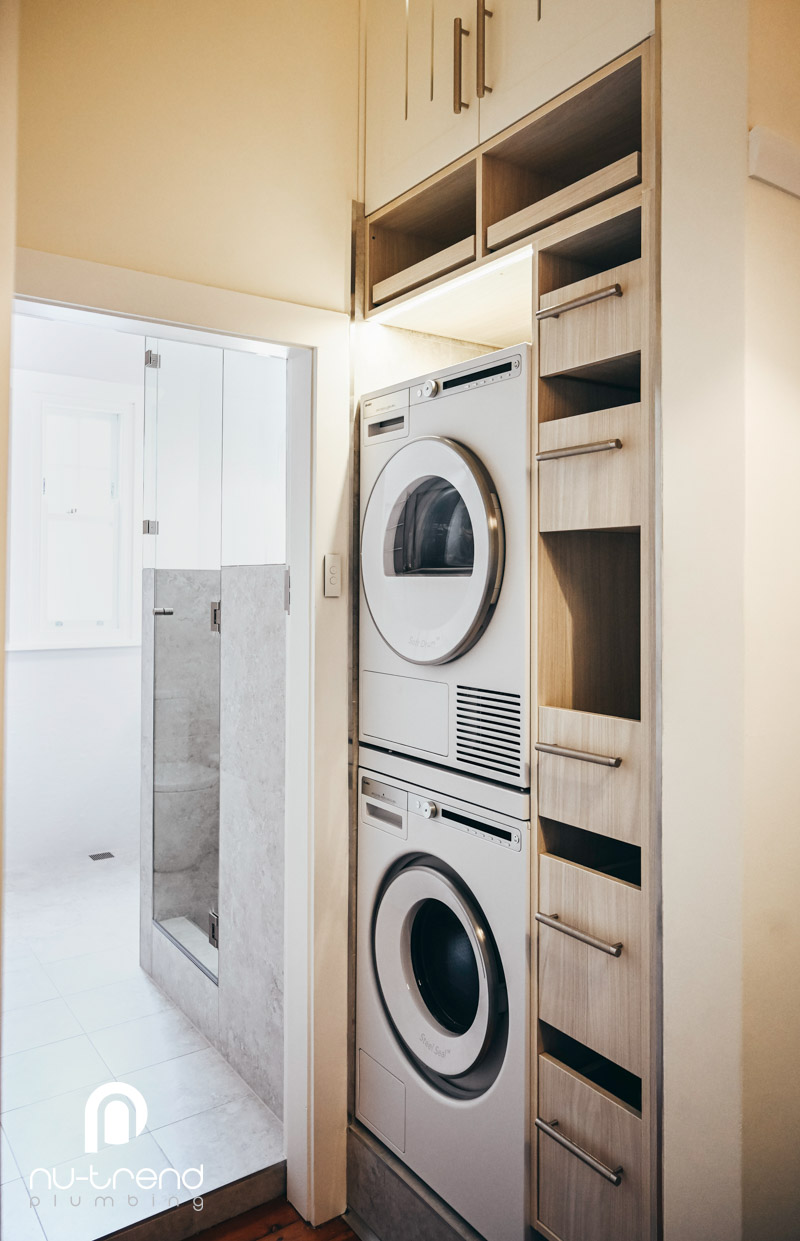
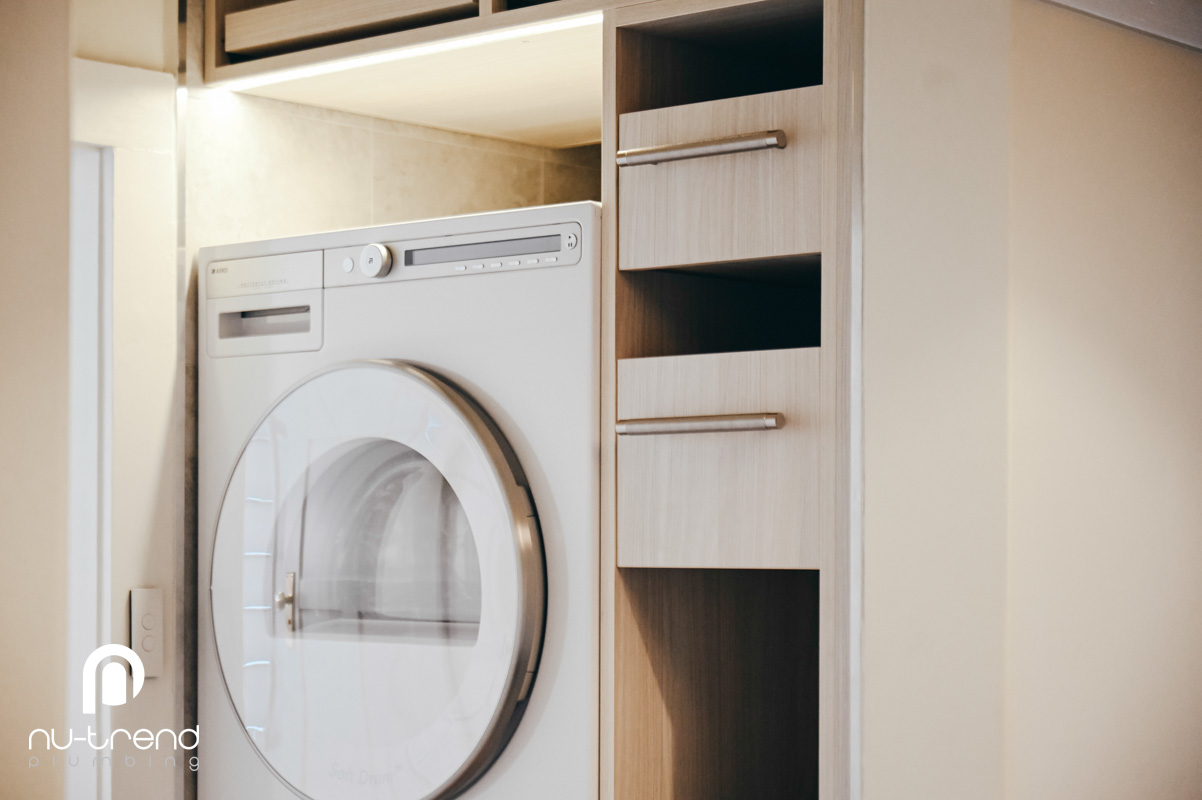
- A full height cupboard with bifold or cavity sliding doors, which conceals both machines completely and gives storage above them.
- Machines under a continuous bench, which reads as joinery rather than as appliances and gives you a folding surface.
- A stacked pair in a recess, closed with a single door, which is the most space efficient answer in a narrow room or an apartment.
- A half wall or screen dividing the wet zone from the laundry zone, which suits longer rooms and keeps the shower out of sight of the door.
In every case the machines need service access, a power point positioned so the plug is reachable, and enough clearance for the doors to open fully. Joinery that looks perfect and cannot be serviced is a common and expensive mistake.
Bench, storage and layout details worth getting right
These are the details that decide whether the finished room is pleasant to use, and they cost very little to get right at design stage and a great deal to change afterwards.
- Bench depth of at least 650mm if a front loader sits underneath, so the machine fits and the bench does not overhang awkwardly.
- More power points than you think you need, positioned for the machines, an iron and charging.
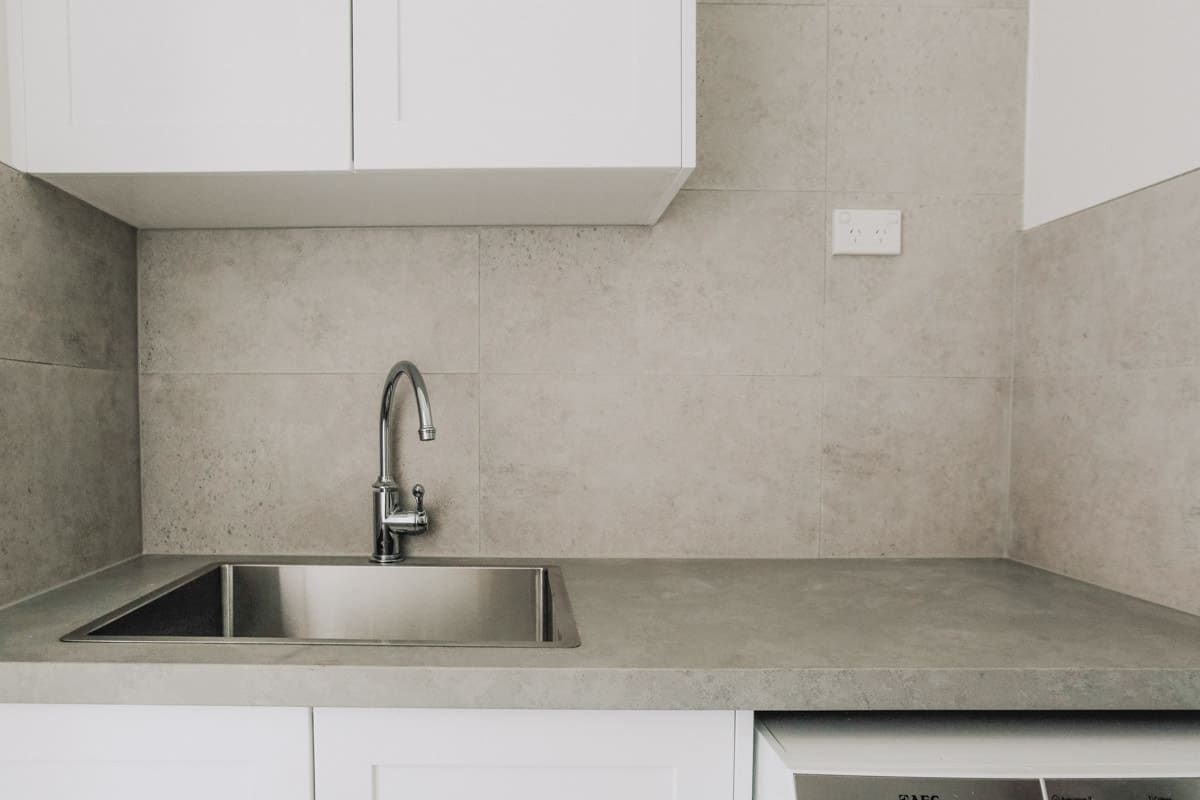
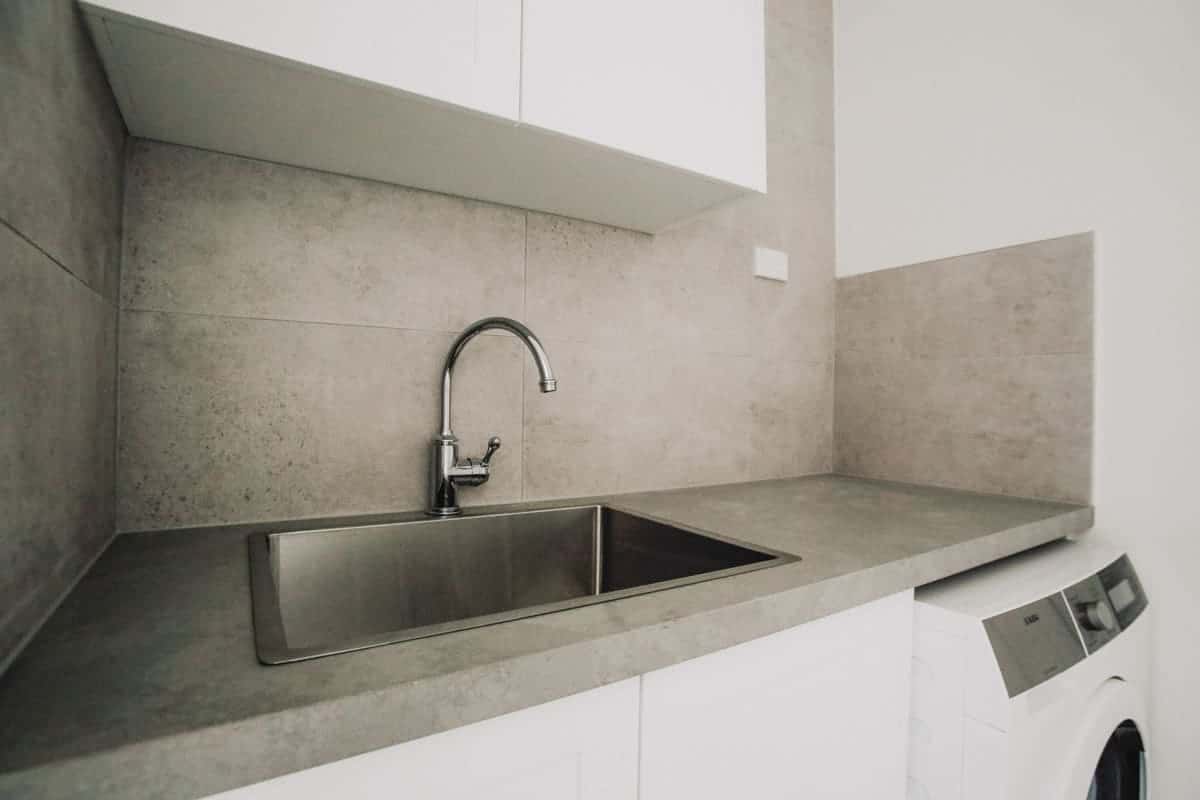
- A deep sink rather than a shallow one, because soaking and hand washing are what a laundry sink is actually for.
- A mixer with a pull out hose, which does more work in a laundry than any other single fitting.
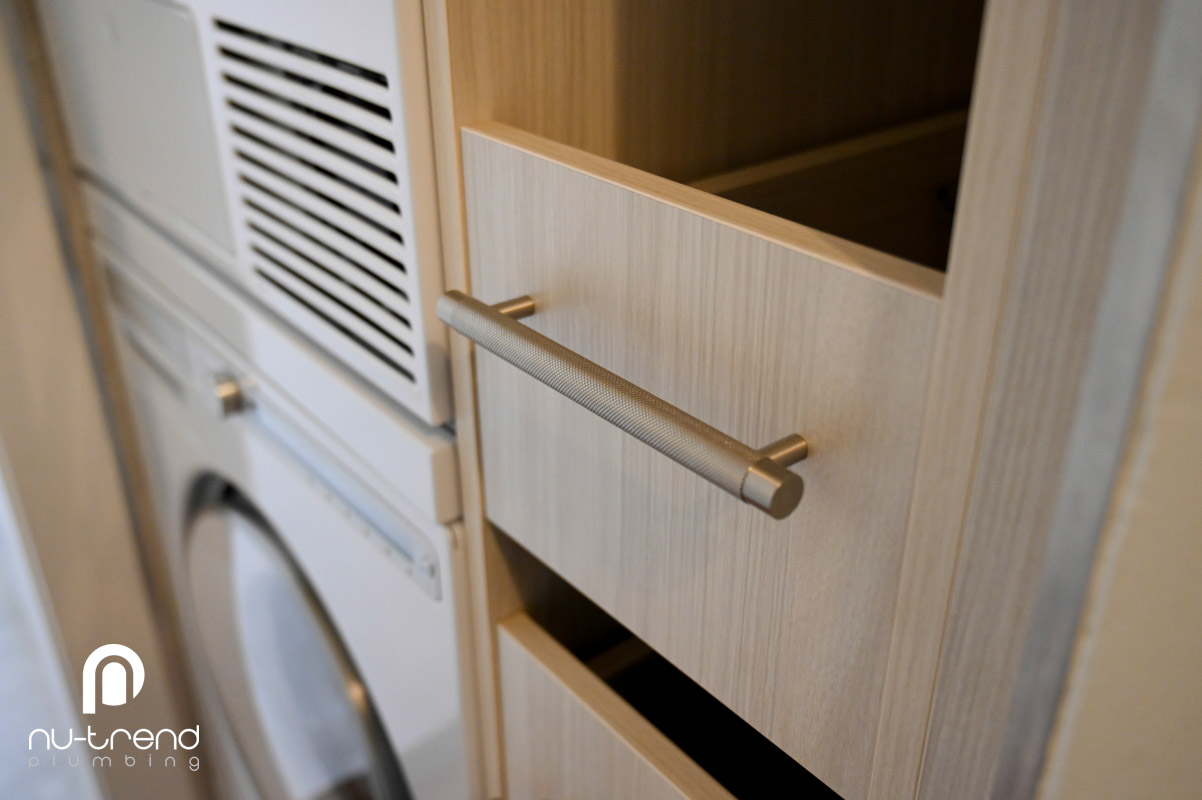
- Drawers rather than cupboards for the things used daily, and a pull out basket if the space allows it.
- At least 600mm of clearance above a bench if a hanging rail goes there.
- Somewhere tall and narrow for the broom, mop and vacuum, which otherwise end up leaning in a corner.
- Direct external access if the room has it, because carrying washing through the house is the thing people complain about later.
Common questions about bathroom subfloor repairs
Is it a good idea to put a washing machine in a bathroom?
In a well designed and properly ventilated room, yes, and it is common in apartments and in smaller homes across Sydney. The two things that decide whether it works are ventilation sized for the combined room and joinery that conceals the machines while still allowing service access. In a small, poorly ventilated bathroom with no exhaust, it is a mould problem waiting to happen.
Can you remove the wall between a bathroom and a laundry?
Usually, provided the wall is not structural and does not carry services that cannot be relocated. We check both before quoting. Where the wall is load bearing it can still often be removed with a beam and engineering, which adds cost but is rarely a reason to abandon the idea.
How much does it cost to move the laundry plumbing?
It depends almost entirely on the floor.
On a suspended timber floor with subfloor access, relocating drainage is straightforward.
On a concrete slab it means saw cutting the slab to create a new channel, which is more work and more cost.
An estimate is from $1,000 to $4,000
Does combining the rooms add value to a home?
It depends on what the change makes possible. Folding the laundry into the bathroom rarely adds value on its own, but it often frees the old laundry to become a second bathroom or ensuite, and bathroom count does move price. Reserve Bank research on Sydney apartment sales found a second bathroom was associated with roughly 11.5% higher prices than one, all else equal
The one caution is that removing a separate laundry entirely can count against a larger family home where buyers expect one, so the calculation is different in a two bedroom unit than in a four bedroom house.
Can a toilet be moved on a concrete slab?
Yes. The slab is saw cut to create a channel for the new drainage line, the pipework is laid at the correct grade, and the slab is made good before the floor is screeded and waterproofed. It is a normal part of a combined room renovation where the layout changes.
Get a floor plan and a fixed price
The useful first step is a plan rather than a quote, because until the layout is settled the price is a guess. We will visit, measure the two rooms, tell you what the wall is doing and whether it can go, and give you a fixed written price against an agreed layout. You can see a combined bathroom and laundry we renovated, and our laundry renovations in Sydney page covers the room on its own.
Call Rick on 0401 165 779 or request a site visit.