Is yellow tongue flooring waterproof? No, and here is what happens
Yellow tongue is a structural particleboard flooring sheet. It is designed for dry areas of a house and it is not a waterproof material. When it is used as the substrate in a bathroom, a laundry or any other wet area in a home, the waterproofing above it eventually lets water through, the sheet swells, loses strength and in the worst cases fails structurally.
On a second storey, that means a floor giving way above the room below.
Building Commission NSW research into serious defects in strata buildings found waterproofing to be the most common defect category of all, ahead of fire safety systems.
This page covers how to recognise failed waterproofing, what causes it, what a repair costs in Sydney, and what your options are if the bathroom was renovated recently. Unfortunately we find builders or renovators who use this material in Sydney bathrooms regularly.
We also share two of the jobs on this page, in Clovelly and in Frenchs Forest, both turned out to have yellow tongue under the tiles from a previous renovation. In both cases the correct answer was to remove it and rebuild the floor in fibre cement sheeting before anything else could happen.
What yellow tongue actually is, and where it belongs
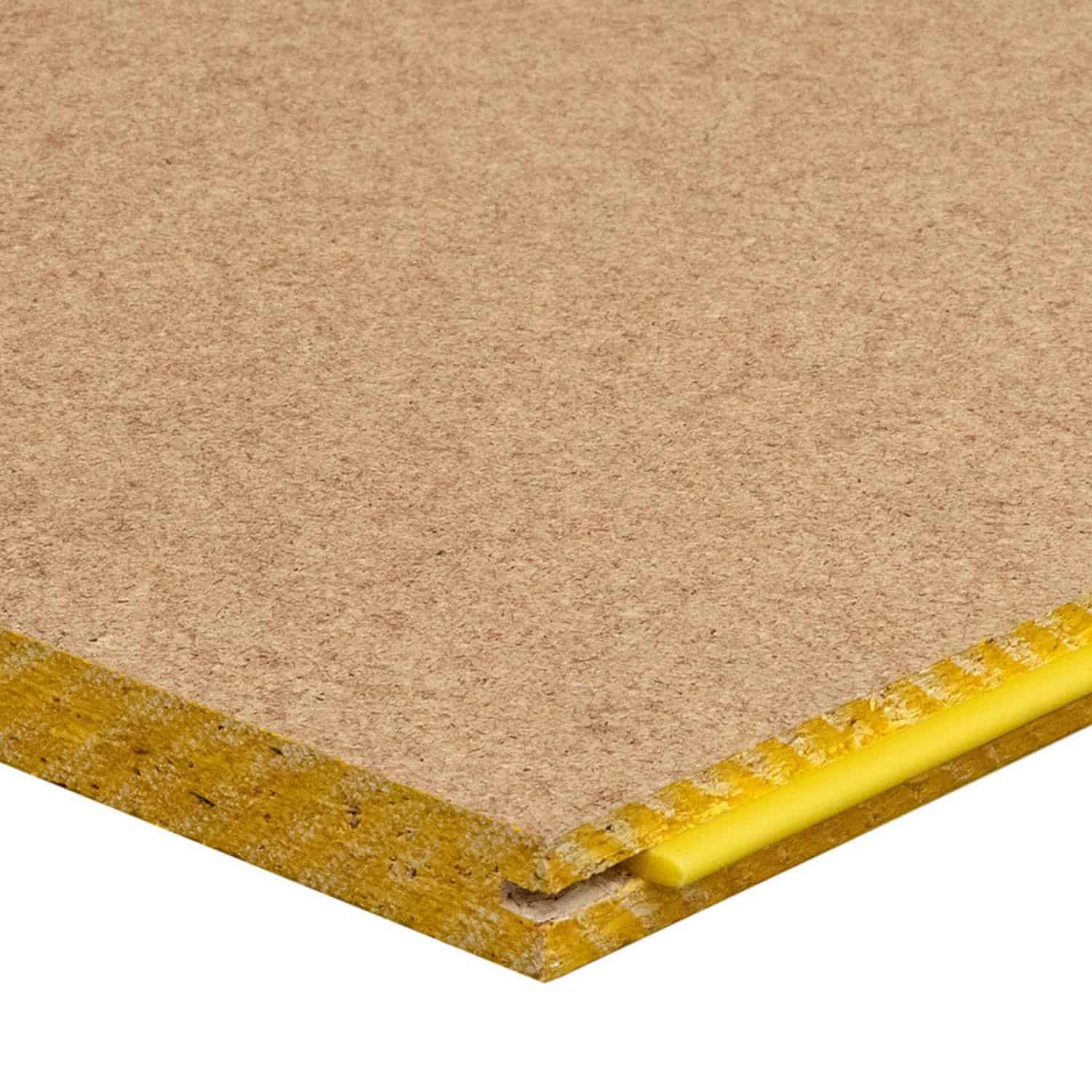
Yellow tongue is a tongue and groove structural particleboard flooring panel, coloured yellow along the tongue edge, used as a platform floor throughout Australian homes. It is a perfectly good product in the rooms it is designed for, which are bedrooms, living areas, hallways and anywhere else that stays dry. It carries load well, it is quick to lay and it is inexpensive, which is why it is everywhere.
What it is not is a wet area substrate.
Particleboard absorbs water, and once it does the fibres swell and the panel does not recover when it dries. A wet area floor in Australia has to be built on a substrate suitable for that use, which in practice means compressed fibre cement sheeting on a timber floor, or a concrete slab.
Why it keeps turning up in bathrooms
Two reasons, and neither of them is good.
- The first is cost and speed. Yellow tongue is cheaper than fibre cement sheeting and faster to lay, so on a job priced to win rather than priced to last it is a tempting saving.
- The second is that it is often already there. When a bathroom is renovated in a room that was previously part of a dry area, or where the previous floor is simply left in place and tiled over, the yellow tongue stays where it is and nobody looks.
This is one of the reasons quotes for the same bathroom can differ by several thousand dollars, and it is covered further on our page about why you should avoid cheap bathroom renovation quotes.
A renovator who intends to strip the floor and rebuild it properly is pricing a different job from one who intends to tile over whatever is underneath. In many cases they won’t even tell you.
What happens when a wet area is built on it
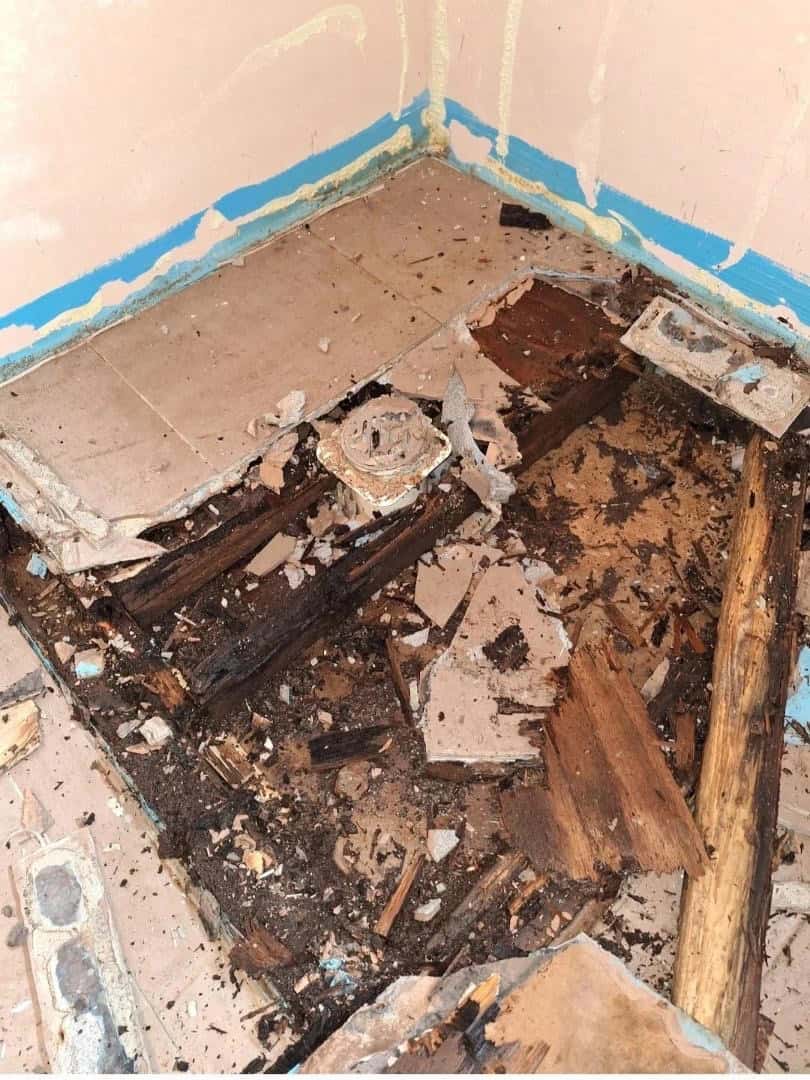
The waterproofing membrane is the only thing keeping water off the substrate, and membranes are not permanent. They are damaged during construction, they crack where a floor moves, and they fail at junctions. In a bathroom built on fibre cement or concrete, a small membrane failure causes a leak that gets found and repaired.
In a bathroom built on particleboard, the same failure causes the floor itself to deteriorate. The sequence is consistent.
- Water reaches the sheet
- The sheet swells
- The tiles above it lose their flat bed and begin to crack or lift
- Movement opens the membrane further
- The process accelerates.
On a ground floor this ends as a full floor replacement. On a second storey it becomes a structural risk to the room below.
Two Sydney bathrooms where we found it
Clovelly
Originally the client had a separate bathroom renovated by another company for their ensuite. They werent very happy with the outcome so they decided to use Nu-Trend for their main bathroom.
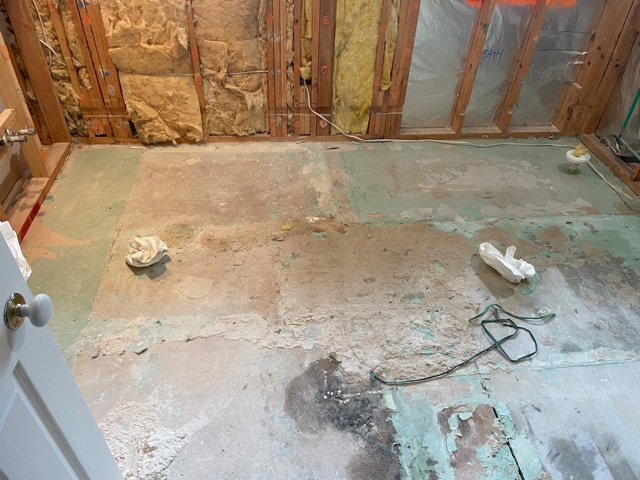
At that stage we didn’t know that the subfloor was going to need replacing as it just looked like a normal tiled bathroom that needed to be renovated. After demolition we could clearly see the subfloor was not built to current building code and needed upgrading to not only make it compliant but safe.
Once we showed the home owners they understood what was required and agreed to the variation in work. Thankfully the joists below the sheeting where in good condition so it was a quick removal and reinstate of the subfloor sheeting with no other remedial repairs required.
Frenchs Forest
This subfloor needed replacing as part of the original quote because the owner wanted to change the lay out of the bathroom. In order to do this we would have to access the plumbing drainage under the subfloor so this was originally quoted to be removed, drainage changed to suit the new lay out which meant a completely new subfloor had to be installed.
Fortunately it also meant we discovered the use of Yellow Tongue & could remove it for them.
How to tell whether your bathroom is built on yellow tongue
You usually cannot tell from inside the room, which is the difficulty. There are four ways to find out short of demolition.
- Look from underneath. In a home with a suspended timber floor and subfloor access, the underside of the sheeting is visible and the material is obvious once you know what you are looking at.
- Check the age and history of the bathroom. Rooms renovated cheaply, rooms converted from a laundry or a dry area, and rooms where the previous floor was tiled over rather than stripped are the higher risk cases.
- Watch for the early symptoms. Tiles that have started to crack in a line, grout that keeps failing in the same place, a floor that feels soft or bouncy near the shower, and a persistent musty smell all point at a floor that is taking water.
- Have it inspected. A bathroom inspection includes checking the substrate where it can be reached, and it is considerably cheaper than discovering the problem after you have paid for new tiling. Where the floor has already taken water, what a subfloor repair costs is the next question.
What it costs to put right
For an average sized bathroom, removing yellow tongue and rebuilding the floor correctly adds between $3,000 and $6,000 to a renovation, depending on the size of the room, how much access there is, and whether the joists and bearers underneath have also been affected by the time it is found.
| What is involved | Why it costs what it does |
|---|---|
| What is involvedRemoving the existing sheeting and tiling | Why it costs what it doesEverything above the substrate has to come out, so this cannot be a partial job |
| What is involvedChecking and re-bracing the floor structure | Why it costs what it doesJoists and bearers are inspected and any that have been affected are replaced |
| What is involvedLaying compressed fibre cement sheeting | Why it costs what it doesThe correct substrate for a wet area, heavier and slower to lay than particleboard |
| What is involvedNew screed and waterproofing membrane | Why it costs what it doesApplied to AS 3740 with the drying time the product requires, then certified |
Type your answer here: yes the budget is right, its definitely quoted as a variation unless the client has asked for the subfloor to be replaced regardless of the outcome or unless we can get a visual of the subfloor potentially from under the house. We hate passing on unforseen variations however we also need to stick to compliances. We stay level headed and call the customer into the room explaining what we found and what needs to happen to fix it. We also explain why and how its not apart of the normal pricing.
Can you tile over yellow tongue?
In a dry area, yes, with the correct surface preparation and the right adhesive and underlay system. In a wet area, no. Tiling over particleboard in a bathroom, laundry, powder room or any other wet area does not meet the requirements for wet area construction, and the fact that it can physically be done is the reason it keeps happening.
The distinction matters because people read the answer for a dry area and apply it to a bathroom. Tiles and adhesive are not waterproof. Grout is not waterproof. Water gets through all three, which is why a membrane exists, and the membrane sits on the substrate.
What a compliant bathroom floor looks like
Australian Standard AS 3740 covers waterproofing of domestic wet areas and sets out what has to be waterproofed and to what extent. In a typical bathroom that means the whole floor, the shower walls to a defined height, the vertical angles, and any hob.
In New South Wales the waterproofing must be carried out by a licensed waterproofer and certified, and doing it yourself can affect both a warranty and an insurance claim.
The National Construction Code draws a distinction here that explains most of the failures we are called out to. A concrete bathroom floor only has to be water resistant, but where the floor is particleboard, plywood or any other timber based sheeting, clause 10.2.3 of the Housing Provisions requires the floor of the entire room to be waterproof, and the shower floor must be waterproof in every case.
Yellow tongue is therefore not so much a banned product as a product that removes every shortcut, which is why the work so often falls short when the floor has been priced and built as though it were concrete.
Building Commission NSW research into serious defects in strata buildings found waterproofing to be the most prevalent defect category of all, at 22 per cent, ahead of fire safety systems, and it stays common precisely because the shortcuts are invisible once the tiles are on. We document a new bathroom with failed waterproofing where exactly that happened, and how DIY waterproofing can cost thousands to repair separately.
We document a new bathroom with failed waterproofing where exactly that happened, and how DIY waterproofing can cost thousands to repair separately.
Every Nu-Trend bathroom is built with the floor stripped back to structure, inspected, rebuilt where needed in the correct substrate, screeded, waterproofed to AS 3740 and certified before a single tile is laid.
Common questions about bathroom subfloor repairs
Can you use yellow tongue flooring in wet areas?
No. It is a structural particleboard designed for dry areas and it is not a suitable substrate for a bathroom, laundry, powder room or kitchen floor. If it is already there, it needs to come out before the room is waterproofed and tiled.
Can yellow tongue get wet?
It will survive incidental wetting during construction, which is why it is sometimes assumed to be more water tolerant than it is. What it does not survive is sustained or repeated exposure. Once the sheet absorbs water it swells, and it does not return to its original strength or dimension when it dries out.
How do you waterproof yellow tongue flooring?
You do not. There are coatings sold as waterproofing for particleboard, and they change nothing about the fact that the substrate is unsuitable for a wet area. The correct answer is to replace the sheet with the right material.
What is the right bathroom subfloor material in Australia?
On a timber floor, compressed fibre cement sheeting laid to the manufacturer specification, then screeded and waterproofed. On a slab, the concrete itself, prepared, screeded and waterproofed. Both then require a membrane installed and certified to AS 3740.
My bathroom was renovated recently. Should I be worried?
Only if you have symptoms or if the renovation was noticeably cheap. The warning signs are tiles cracking in a line, grout or silicone that keeps failing in the same spot, a floor that feels soft, and a musty smell that does not clear. Any of those is worth an inspection.
Get your floor checked before you tile over it
If you are about to renovate, the single most useful thing you can do is find out what your floor is built on before you commit to a quote, because it is the difference between a job that lasts and a job that fails in five years. We will inspect the floor, tell you what is there and give you a fixed written price for whatever it needs. Call Rick on 0401 165 779 or book a bathroom inspection.